Nov 19, 2025
The Greatest Invention in History?
The Greatest Inventions in History
"What is the greatest invention in history?" We are sitting front and center in what may be the most meaningful scientific event in human history. The answer, however, is not yet Artificial Intelligence. This becomes clear by looking at the breakthroughs that came before AI, as well as by the chain reaction those other inventions unleashed — all of which led to AI even being possible.
The first candidate is one you could not imagine life without: the alphabet. This very post could not exist. The ability to convert spoken language to the written page allowed communication to escape the limits of mostly one-to-one conversations. Ideas could not be exchanged between people who are not talking to each other, let alone who have not or will not ever meet. Written communication enabled ideas to travel across countries or through time. If ideas could not be put into writing, government and law could barely function, and philosophy, science & technology could never have meaningfully developed. Even art — which draws on ideas for the inspiration of every significant work — would have stagnated.
The second candidate has enabled everything from exploration to everyday travel: the map. The points on a map — home, work, school, the homes of our friends and family — give us a sense of sanctuary. Imagine erasing not just all of these points, but every line connecting them. There would no longer be streets, city limits, county lines, mountains, rivers, and oceans. It would become unclear how to define a country. Without the map we don’t just lose where we are, we lose who we are.
The third candidate in many ways ushered in the modern era: the electric circuit. Electricity warms our homes in the winter and cools them in summer. It not only allowed us to refrigerate fresh food, but put an end to warfare between countries fighting over salt as a critical national resource. It has enabled the pillars of our unprecedented prosperity, health, and longevity — such as transportation, healthcare, and the water supply. Without the electrical circuit, the foundational design for almost every computer, the von Neumann architecture, would never have come to life and told electrons where to go and when.
AI’s Winter becomes an Endless Summer
Now back to AI. For decades, AI would not even receive an honorable mention as a candidate for the greatest invention. AI lived through what was called the “AI winter”, when AI had small breakthroughs, models weren’t reliable, there wasn’t enough data for those models, and the models required compute that were expensive and slow. Then in the Spring of 2023 the ChatGPT moment happened when OpenAI’s newly released GPT-4 captured the public’s imagination with its human-like performance in several areas, and how it enabled us to do so many new things we would have not thought possible in our daily lives. Unlike the alphabet, the map, and the electric circuit — it’s still too early to imagine just how much life would change without AI.
Movement
What is already clear is that all these tools share a common trait: movement. The alphabet allowed ideas to travel across regions and generations. The map made it possible for many more people to make travel an everyday reality. The electric circuit enabled the movement of electrons. With AI you cannot see the movement, but that movement is critical for its very functioning. AIs running on GPUs transformed electron movement into coordinated parallel motion of thousands of cores, millions of threads, and billions of operations. AIs surging through GPUs are an entirely different form of electron choreography.
The other thing these inventions have in common is that they all have transformed our world in ways beyond anyone’s imagination at their time of invention. The alphabet enabled personal identity, sharing ideas across places and time, and the establishment and flourishing of philosophy, literature, science, technology, and much of art. The map allowed the discovery of new lands and connected the world. The electric circuit gave us so many fundamentals of daily life — basic energy with heat, light, refrigeration and transportation. And now the GPUs that are the central nervous system of the entire AI compute infrastructure.
These inventions are ultimately intertwined because each one would not have been possible without the ones that preceded it. The alphabet gave us the ability to put the words that appear on maps. Maps enabled the cartographic design that on a micro scale is a circuit. The electric circuit is the fundamental building block (or first physical primitive) that makes AI possible.
Just as no one could have known the full potential of each of these inventions in their infancy, the future arc of AI is still beyond the edge of our imagination.
Specific AIs for specific domains
Even now at the infancy of AI we are already at one of these points in history where progress is exponential and society as a whole is making strides forward not previously conceived of as possible. Scientific progress has never followed a single straight line. Rather, advances have been achieved through exploring multiple pathways at once for a simple reason — there is no way to know the breakthrough that works until it has been discovered.
Major breakthroughs throughout history have come from this sort of branching-and-converging: multiple architectures experimenting, competing, and ultimately integrating into something far greater than any single one. The alphabet, the map, and the electric circuit have all followed this pattern.
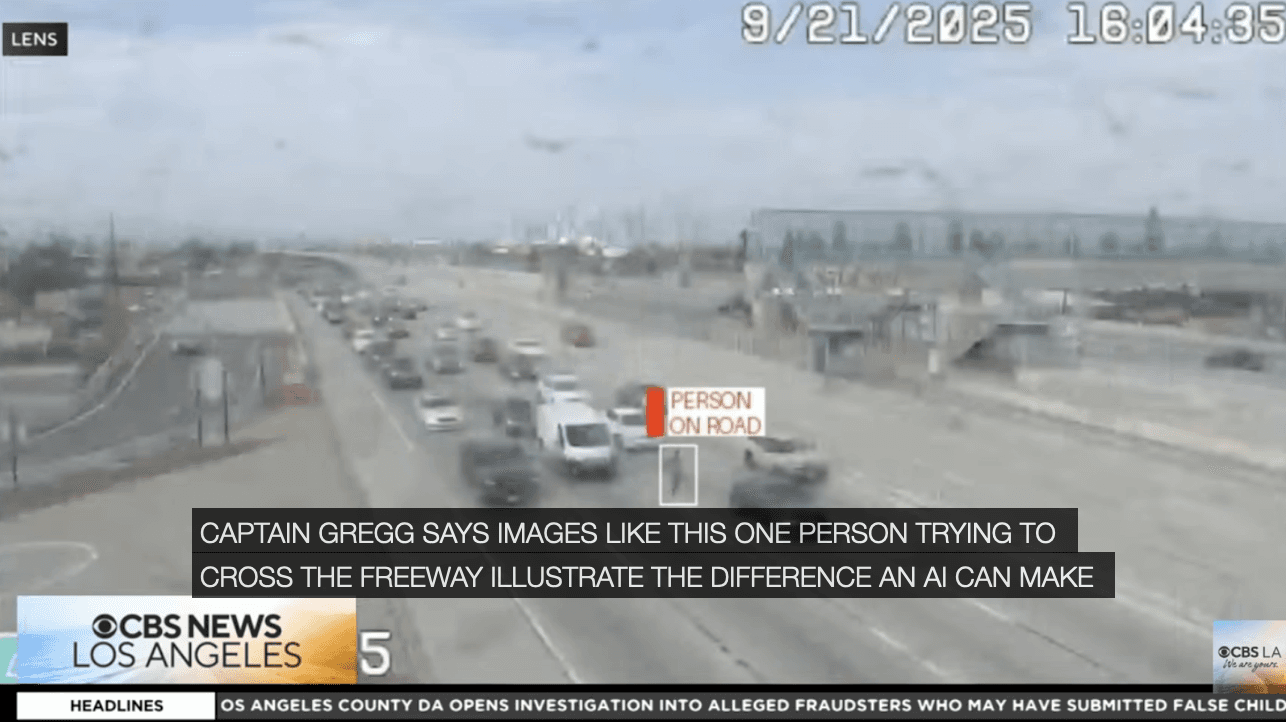
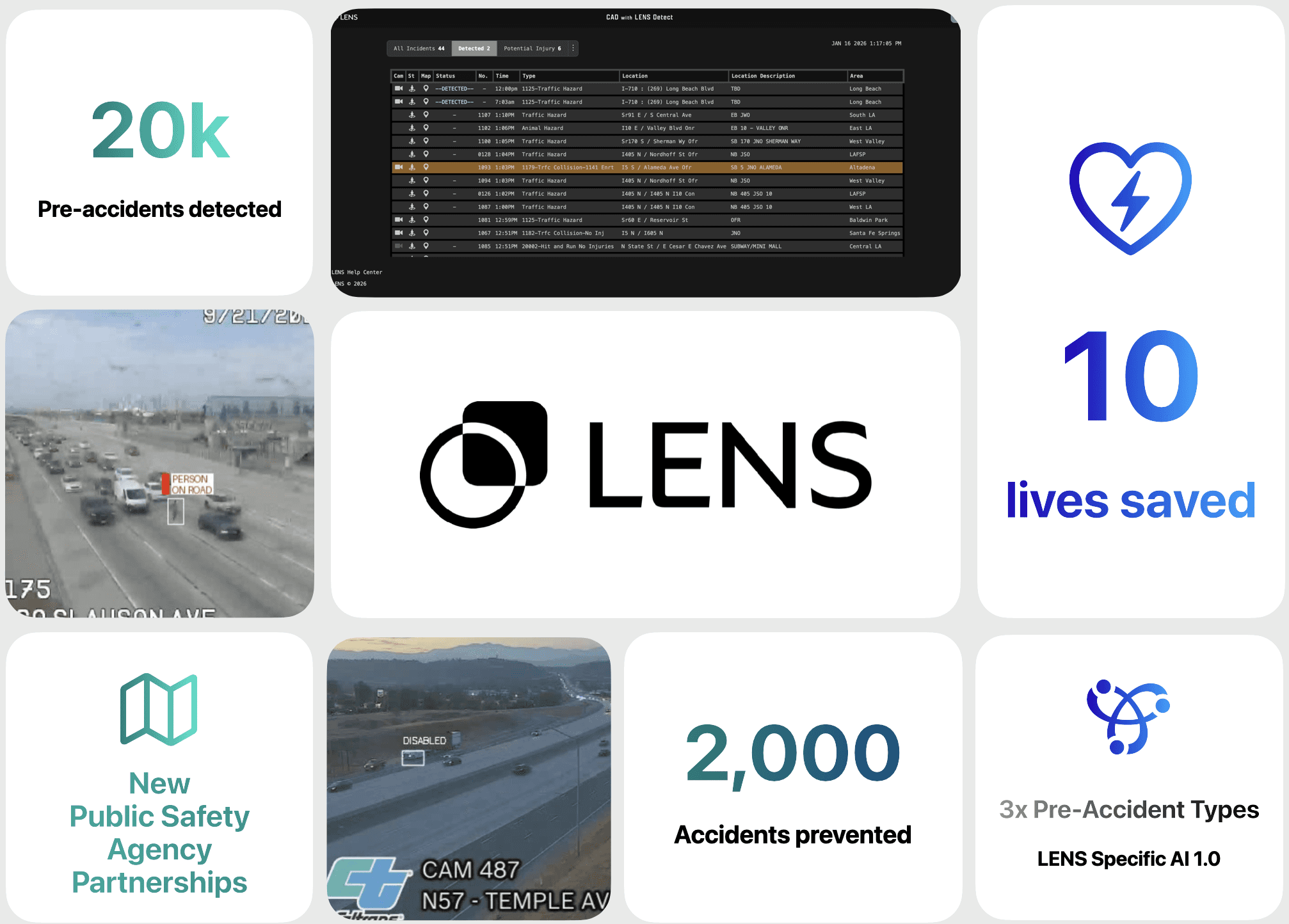
This is the ethos that drives LENS. We have taken a math-based approach to develop a Specific AI dedicated to ending traffic accidents. Focusing on a single domain does not inherently limit the impact — ending traffic accidents would touch the lives of everyone. A math-based architecture applied to a single domain produces very precise, extremely fast, and highly scalable responses to questions that have deep value for its targeted purpose.
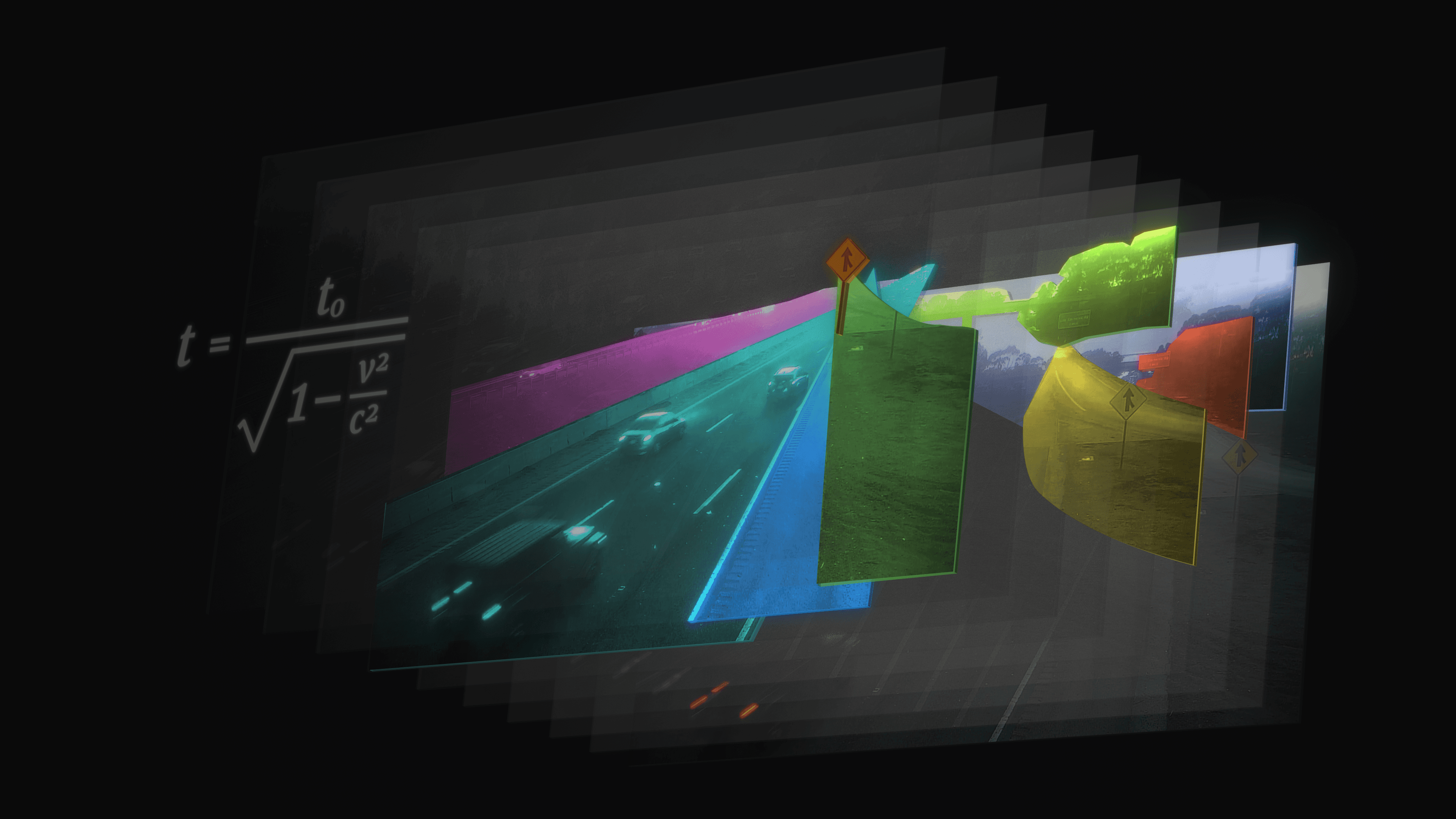
Specific AI applies integral calculus to represent intelligence domains as areas under a curve. It divides each of those areas within the domain into smaller and smaller pieces to achieve a continually deeper and more precise understanding. This enables intelligence to compound efficiently, generating unusually high accuracy within its narrow realm. This enhanced accuracy has been critical for LENS in furthering its mission to end traffic accidents, because it has a direct impact on how many accidents can be prevented & how many lives can be saved.
All of this brings us back to the question of what is the greatest invention in history. For AI to realize its full potential and earn that title as we all expect, it will need immense energy, creativity, and resources deeply devoted to a broad spectrum of approaches in order to discover which building blocks and stepping stones will unlock its nearly limitless potential.