Dec 5, 2025
Hazard Analysis: Disabled Vehicles
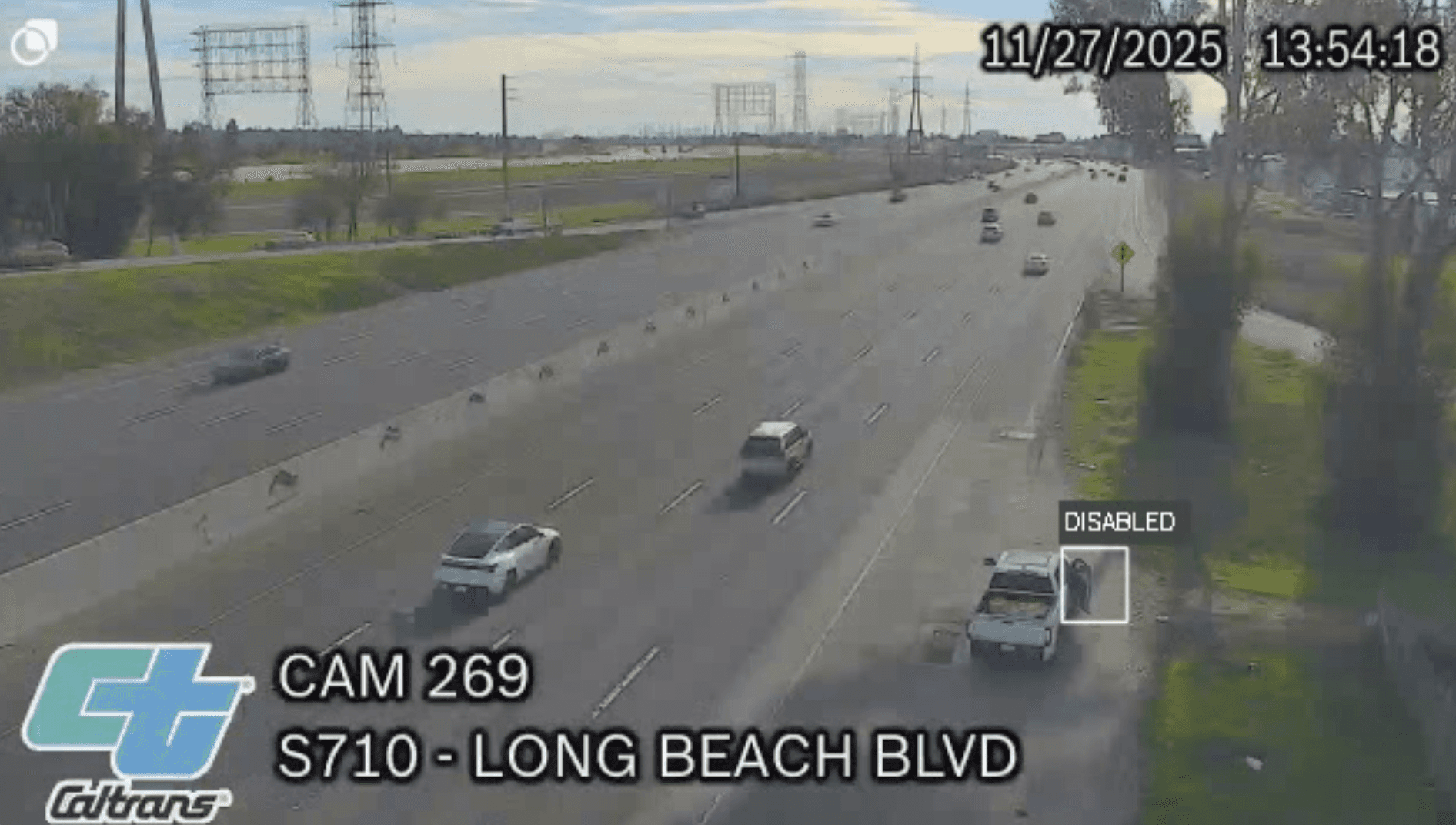
The LENS mission to end traffic accidents directs focus toward what is both practical and preventable. One of the most frequent questions we receive is ”how did LENS determine to focus on detecting Disabled Vehicles first?”
Domain Specific Intelligence
The first step is we always begin by listening to Public Safety Officers. They are the boots-on-the-ground, that make the mission possible. LENS’s Specific AI trains on domain specific intelligence — intelligence directly from Public Safety Officers. The LENS team works with Public Safety Officers to evaluate over 500 potential hazards, and these hazards then become the foundation for LENS Specific AI to detect the root causes of the hazards that become accidents.
LENS begins any plan by trying to identify what will enable Public Safety Officers to prevent the most accidents and save the most lives. Public Safety operations are extremely well developed and provide a wealth of knowledge in this area. We will share more in the future on the full fine-grain detail behind the LENS Detect application and Specific AI model that powers and interprets of over 500 potential hazards. For how LENS develops hazard detection today, we have three guiding principles:
Three Guiding Principles
The three principles are:
Detect hazards that prevent the most accidents or save the most lives
Prioritize by understanding time from a detection to an accident occurring
Plan according to the projected time for each Specific AI module to reach operational accuracy after Supervised Learning, Self-supervised pretraining, and Supervised Fine-tuning
One way to envision this analysis is a spreadsheet with 500 rows, one row per hazard type, followed by a column for “accidents caused”, another for “lives lost”, another for “minutes from detection to accident” and a final column for “training time”. This measured approach ensures we are being objective to build and deliver to Public Safety agencies what will help the most people.
Once you do this analysis, “Disabled Vehicles” appear near the top of the list. Many of us see Disabled Vehicles on the road, but may not realize that for every 50 vehicles we see on the side of the road — 1 in 50 or 2% end up in an accident, and every year unfortunately about 1 in 100 or 1% of the lives lost on the road will be from a Disabled Vehicle.
The relatively good news is that there is a meaningful amount of time from a vehicle being disabled to it getting hit. In contrast, a vehicle fire has much less time between the car igniting and preventing any harm.
Finally because of the volume of vehicles, the time for LENS Specific AI to learn and be able to accurately infer a “Disabled Vehicle” is relatively fast — which enables Public Safety Officers to create real-world impact putting it to use to prevent accidents and save lives.
We want to share our continued appreciation for all that Public Safety Officers are continuing to do day-in and day-out to prevent accidents before they happen, and to keep making our roads safer everyday.